Friday, November 4, 2011

The Easy Button

Working with dog owners is often an interesting experience.  Besides teaching agility, I often help friends, family members, and complete strangers with their new puppies, adoptees, and dogs that need some training.  Across the board, I think most people are shocked to find out how much time it takes to train a well-behaved dog. Have you ever watched agility on TV or YouTube and thought how effortless is all looked?   People see other people's dog behave or perform and expect their dogs to do the same, never realizing the work that happens behind the scenes.

One thing to remember is that there is no "Easy Button" for dog training.  If I had one quick, simple solution to training a dog, I could write a book and make a million dollars.


Alas, I am not a millionaire, but I do have a lot of experience.  If you are having issues with your dog, it's best to start with the basics and ask yourself these questions:
  • Is my dog getting daily aerobic exercise?  
  • Is my dog mentally stimulated on a regular basis (training, problem solving, agility, etc.)?
  • Am  I spending enough quality time with him or her cradling, playing fetch, hanging out?
  • Are my dog's basic needs met?  Is he or she in pain, cold, hot, hungry, uncomfortable?
And last, but most importantly:
  • Do I realize that my dog will not learn the correct behaviors if I do not teach them?
  • Am I committed to my dog? 
  • Do I see him or her as a unique individual with basic needs that need to be met by me?
  • Am I willing to put the time into taking care of my dog properly?
  • Do I have the knowledge I need to successfully take care of my dog?
While I know that most of you who read this blog are committed to your dog and do the best that you can, I think that these are questions we need to be constantly asking ourselves.  I realize that if Cheri is acting up, it's usually my fault.  Through each successive puppy, there has come a time when I've had to sit down and decide where my heart really was.  Once I decided that I loved my dog, that I wanted him or her to be around, and more importantly, I wanted us to both be happy, I was able to recommit myself to their cause.

Monday, October 31, 2011

Happy Halloween!

Here are some great pictures from our Halloween party last week-enjoy!  


Friday, October 28, 2011

Halloween Tip #3: Make it Fun For Your Dog

Making Halloween Fun for Your Dog


For some people, Halloween is all about the thrill of being scared.  However, this is not what you want for your dog.  In order to increase your dog's socialization and build their confidence, Halloween should be a happy positive holiday.  So, here are a few quick tips:
  • If you want to work with your dog during this time, watch for signs of stress and give them plenty of breaks in a comfortable, low-key location (crate training anybody?).
  • Treats, treats, and oh boy! more treats!  Every time the doorbell rings, give them a treat-this way they learn to come to you instead of the door...just make sure you don't reward them for barking.
  • Have them interact with friendly strangers who will give them a tummy rub.
  • Teaching your dog to wear a costume?  Have them play fetch in it several times or eat dinner while it's on.  This way, they see the costume and think something exciting is going to happen.
  • Introduce pieces of your own costume, or you child's costume, piece by piece over the weekend.  If your dog is scared of masks (or some other similar costume component), let your dog get used to it in increments.  Leave the mask out on the floor for a few hours and play with toys, do a short training session, give them dinner, all while ignoring the mask.  Let them investigate it at their own discretion.  Later, pick it up with one hand and give them treats from your other hand.  Work on this process until you can put on the mask and have your dog react positively. For more about desensitization, view this post Cheri vs The Chair.


Wednesday, October 26, 2011

Halloween Tip #2: Keeping Your Dog Safe

Keeping Your Dog Safe from Ghouls


As you probably know, that's of crazy things happen on Halloween night.  Ghouls, ghosts, goblins, teenagers...all getting into trouble-as the smashed pumpkins that are seen on the morning of November 1st attest.  On Halloween night, keep your dog either in the garage or in you house.  If your dog is being a scaredy-cat because you are having a Halloween party and/or a lot of trick-or-treaters are coming by, keep them in a separate room or a kennel.  Work on ironing out those fear issues later when you have more time and control of the situation.  

Monday, October 24, 2011

Halloween Tip #1: Only Tricks, No (Human) Treats

Only Tricks, No (Human) Treats


Halloween officially kicks off the holiday season.  With the holidays comes family, friends, decorations, food, and lots of other things that are exciting for both you and your dog.  However, the holidays is a very important time to keep a watchful eye on your pooch.

During halloween, packaged candy is in abundance and can be a real health hazard if your dog ingests it. Here are three reasons why:

  • Chocolate is toxic for dogs.  Of course, your dog and the amount and type of chocolate they ingest is a factor, you never want to take that chance.  Check out a previous post for more information: The Chocolate Chart
  • Xylitol, an artificial sweetener (most often found in gum, but also found in many other sweets), is also very toxic for your dog.  Check out this website for more information: Vet's View: Xylitol can be deadly to dogs
  • If your dog is anything like Cheri, they will attempt to eat anything that is remotely appealing.  Wrappers, with all the sticky smelly bits leftover, seem to be a tasty treat.  However, when ingested they can get stuck and cause all sorts of intestinal damage.  

The main point of this message?  Keep Halloween candy out of your dog's reach.   Make sure they aren't dumpster diving for wrappers, begging tidbits from visitors, or stealing children's peanut butter goodies.   Give dogs their own "special treat" instead, a nylabone or stuffed kong.  Have them perform "tricks" for guests and make sure they are rewarded from their own store of dog appropriate treats.  

Friday, October 21, 2011

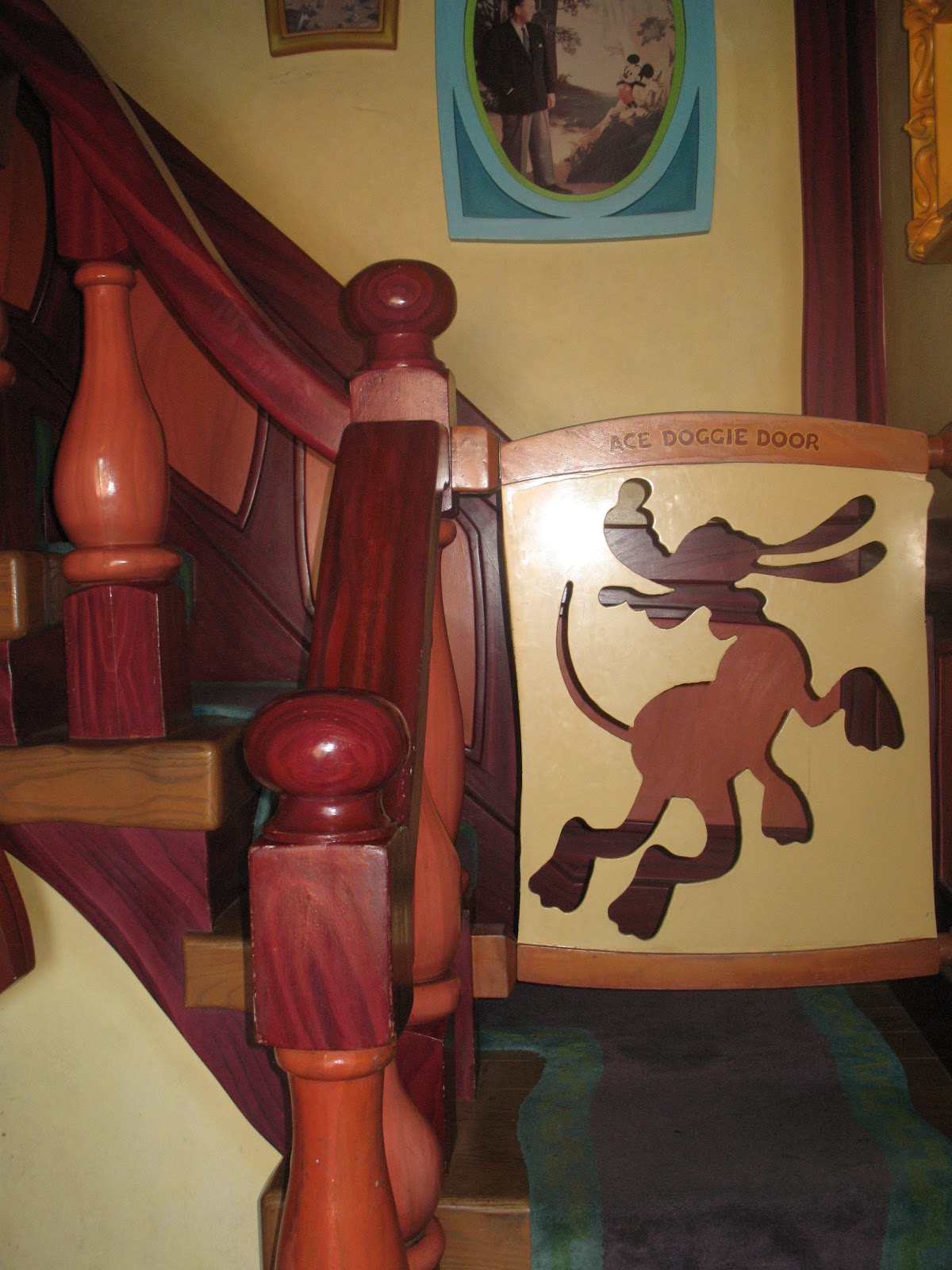
Pluto's Dog Door

Just a few fun pictures I took at Disneyland this summer.  We went and saw Mickey's house, and of course, he had a dog door for Pluto-not really sure how it's supposed to work...any ideas?.


Wednesday, October 19, 2011

On and Off Side Weave Entrances

Here is some terminology that I'll rarely use in class, but that may be helpful when you are discussing a course with other agility enthusiasts.

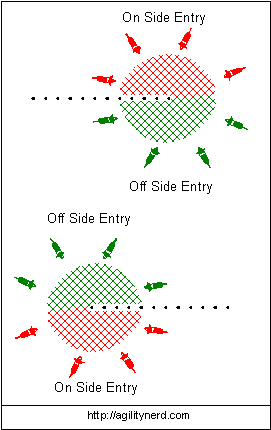
On Side Entrance: The dog is heading toward the weave poles on the side they should be entering.  With our practice set of weaves, this would mean they are headed towards and can see the red tape.

Off Side Entrance:  The dog is heading toward the weave poles on the opposite side they should be entering, meaning they will have to go "around" the first pole before officially entering the weaves.  With our weaves, they would not be able to see the red tape until they go around the first pole.

Do you feel confused?  Here is a great diagram (courtesy of AgilityNerd.com, which, I may say, is a great website) that may help you out:


Obviously, the dog should learn to enter the weave poles regardless of the angle or location his or she is coming from, no matter the technical terms involved.  However, if you like learning agility jargon, feel free to start incorporating these new terms!


Friday, October 14, 2011

Canine Stress

Canine stress can be manifested in many ways: stretching, itching, yawning, licking lips, turning away, diarrhea, etc.  Many different things can cause your dog stress, including, but not limited to:

  • children
  • thunderstorms
  • loud noises
  • corrections
  • overly assertive behavior

But wait! You say, my dog LOVES children or is completely fine during thunderstorms.  Obviously, this is a extremely general list and because your dog is unique, they also have unique triggers inducing stress.  So, the best thing to do is to look for the signs of stress if your dog.

How about we review the video from last week's post about the weave poles and see if you can't pick out a) what Cheri's stress reaction is, and b) what is triggering her stress reaction.

Think you have the answer?  Then read on and see if you've got it.

Cheri gets stressed after she 'fails' the weaves twice in a row and gets a verbal negative marker for it.  So, what does she do?   She itches.  Could she really have had a legitimate itch?  Sure, but it's unlikely, especially since I know that before this little video, we had worked pretty hard on the course after an already long time at work, school, and agility classes.  After this video, we wrapped up and went home.

So, is stress bad?  That really depends on how much stress your dog is experiencing.  Everybody and every dog gets stressed and this is often what motivates us to change.  A little stress during training is not bad, and if dealt with correctly, helps a dog to grow.  Take the above video for example, or think of the first time your dog learned the dog walk or teeter.  Most dogs are not comfortable the fist time.  But, with making sure they positively complete the task, you can work through this stress and make it beneficial for both you and your dog. 

However, excessive long-term stress is emotionally and psychologically bad.  Think of the Fourth of July and all its fireworks-if you live in a place where the celebrations are loud and long, this could negatively impact your dog.  This blog, focused mainly on items for agility, is not intended to help your dog with long-term or excessive stress.  If your dog experiences extreme stress over a long period of time, or is constantly stressed, it's probably best you consult a behavioralist. 

The take home message is this:  Look for signs of stress in your dog.  If you find they are experiencing stress, ask yourself, "Is this something he/she needs to get over? Or is this a one-time event?"  If it's something small they just need to get over, work on creating that environment of success to help your dog work through his/her issues.  If it's a one time event (you're at the dog park and there's a crazy dog running around terrorizing your Chihuahua), then just leave and take your dog out of the situation.  

For a great article about canine stress, read the article Identifying and Coping with Canine Stress

Monday, October 10, 2011

Costumes Galore

Just a few images to get you excited about our upcoming Halloween party and costume contest!


Friday, October 7, 2011

Reworking the Weaves

Dog training is an art.  Dogs are variable, unique, and make their own decisions.  They are not a math problem that can simply be solved by doing all the exact same steps every time.  Often handlers get frustrated with their dogs because they don't behave or perform to their expectations.  An example of this is when a dog is learning the weave poles.  The weaves are very hard to master, but it can be done.  Along the way, however, there may be many items to work through.  Often people will get very excited, saying, "Did you see that? Fido totally just did the weave poles all on his own!"  The handler will then send Fido through the weave poles again and again, expecting him to do it perfectly every time from here on out.  When Fido skips a weave, or otherwise makes a mistake, the handler will become frustrated with the dog, wondering why he did it right before and is making mistakes now.  There are so many factors that affect a dog's performance at any given time.  That's why you work on minimizing these factors and proofing your dog  How you handle the mistakes, however, is really the focus of this post.

Getting mad at your dog over and over after he makes a mistake will only teach him that working with you is a negative experience.  Nobody likes to fail repeatedly and neither does your dog.  Instead, if your pup is having a hard time, you want to help them out and create that environment of success. 

The video below is an example of this concept.  This was filmed several months ago when Cheri was becoming pretty competent on the weaves but was still in the earlier stages of the learning process.  She had been doing the weaves more or less independently but would still have occasional issues.  Watch the video, then I'll discuss a little more below. 

(P.S. the sound in the video is terrible-even I can't understand what I was saying at the beginning...something about treats...it's not really relevant, so don't worry about that portion.)


So, as a quick recap, Cheri was doing the weaves and missed on of the last gaps.  I gave her a negative marker, started her over, and she missed it again.  At this point, I realized that the first miss was not just a fluke (that does happen sometimes) since she missed the exact same spot the second time through.  So, the third time I take her through, we slow down a hair, and I give her a deliberate hand signal when she gets to the problem spot, reminding her that she needs to come around that pole.  If you missed this, I would recommend watching it again.

Also, a few other points to notice:
  • My negative marker was relatively unemotional (I could actually use some work here though).
  • Once she did successfully complete the weaves, she got extra praise.
  • I took her through one more time and she again successfully completed the weaves-this reinforces the positive pattern.
  • If you watch closely, you can probably figure out one of the reasons why she missed the spots both times.
  • It is interesting to also observe what Cheri does after the second time she misses the weaves and after the second negative marker I give her.  This behavior will be discussed in a post next week.

Wednesday, October 5, 2011

USDAA

While Zoomdog is not currently affiliated with a specific agility organization, we do focus mainly on rules, equipment, etc. of The United States Dog Agility Association (USDAA).  Check out their About Us  portion of their website to learn a little more about their origins and accomplishments.  USDAA has also made many changes this year, to check out a few of them, visit DogSports article: USDAA New Nips.


Monday, October 3, 2011

Cache Humane's Sweat for a Pet

This Saturday, October 8th, Cache Humane will be holding their annual Sweat for a Pet.  Check out their flyer below and make sure you come and try out our agility equipment that day!


Wednesday, September 28, 2011

Crosses

How many front and rear crosses can you spot in this video?


Monday, September 26, 2011

Barking

There are many ways of viewing a barking dog.   Some people encourage it because they feel it's a way for their dog to express him/herself.  Others enjoy it because it's part of the burglar prevention program.
Most dog owners (and let's face it, neighbors, friends, etc.), on the other hand, feel like it's a nuisance but don't know what to do about it.  While there are various books, training methods, and tools that help with barking, I'm going to briefly explain one method that I find is often successful.

Bark and Spray; Quiet and Reward

Everybody who has ever done training with me has learned about positive and negative markers.  These are ways that we communicate with our dog that they have either done the correct thing or have done something incorrect.  The positive marker (click, treats, verbal, pets-whatever one or combo of these you choose), lets the dog know they performed well and encourages them to repeat that behavior in the future.  A negative marker (typically a verbal 'wrong' sound), let's them know that they performed an inappropriate behavior.  After a negative marker, it is the handler's responsibility to help the dog then perform the appropriate task so that the dog can replace the negative behavior with the positive one and thus receive a reward.  If you've done this correctly, with enough consistency and repetition, the dog will learn that an inappropriate behavior will bring no reward, but by doing the desired behavior, they get a positive reward.

If the handler and dog can learn this communication pattern, training becomes significantly easier.  Likewise, this pattern is one of the very basic components of behavior modification.  Here is our first pattern:

1. Handler commands
2. Dog obeys
3. Handler gives positive maker / reward
4. Dog is likely to obey command again

Now, obviously, if you own a dog (have children, interact with any other human being...) you know this isn't always how it works out.  Here is the second pattern:

1. Handler commands
2. Dog fails to obey
3. Handler gives negative marker
4. Handler commands dog again (and while enforcing a newly-learned behavior, helps them to achieve the goal by luring, encouraging, etc.)
5. Dog obeys
6. Handler give positive marker / reward
7. Dog is likely to obey command again

What does this have to do with barking?  As mentioned before, this pattern, once learned, is invaluable when training your dog.  It is the pattern from which this Bark and Spray; Quiet and Reward method is derived from.  While it doesn't follow exactly, conceptually, it is all the same.

  • Dog barks
  • Handler gives a 'quiet' command
  • Dog fails to obey and continues barking
  • Handler gives negative marker-here we add a squirt from a squirt bottle to the negative verbal marker-if the dog is barking like crazy, is he or she going to hear your negative marker at first? There is other psychology behinds this-ask me if you'd like to discuss it and we'll have a chat.
  • Handler gives 'quiet' command again and helps to refocus the dog on the handler.  (In this situation, this part may not be necessary if the squirt bottle and negative marker from the previous step end the barking)
  • Once the dog is quiet / obeying the command, the handler give a positive marker / reward.
With consistency and repetition, the dog learns the appropriate behavior pattern of not barking / stopping barking when the 'quiet' command is given.  Of course each dog, handler, and situation is different and unique and that's why dog training is an art.  However, once you get the basics down, you can adapt the training to your needs and be well on your way to a quiet pooch.

Friday, September 23, 2011

Cradling

What is cradling?  Cradling is kind of a hard concept to explain, so my assistant, Cheri, and I teamed together to take a wonderful shot of it in action.

Notice some key features: Cheri's tail is flat (kind of hard to see, but you don't see it curled up under her bum because she's nervous or uncomfortable).  Cheri's eyes are relaxed.  Cheri isn't struggling.  Becca is leaning against something.  Becca is smiling.  Becca and Cheri are having a good time together.

Here's the multi-million dollar tip:  Rome was not built in a day.

Okay, so that saying is kind of cliche and overused.  How about 'Cheri has been gradually introduced to cradling since the day we got her,' or better yet 'Teaching your dog to cradle comfortably takes time and effort.'

How do you introduce cradling?  This, like any other training, will often vary depending on the dog.  However, here is a step by step process starting from scratch.  Do each of these steps 3 plus times a day for several days before moving to the next step.  Your dog may be comfortable starting further down this list.  What really matters, however, is that you take it nice and slow and focus on helping your dog be comfortable with the end result.

1.  Sit on the floor and hug your dog, give him or her a treat and lots a praise while doing it.  Make it fun and exciting.  Lots of dogs are not used to your body being close to them and may feel it's an invasion of their personal bubble.
2.  Sit on the floor (with a back rest for you!) and have your dog lay next to you and repeat step 1.
3.  Once your dog stays in a down while you are hugging him or her, start petting your dog for a few minutes then give them their release word to get up.
4.  Repeat step 3-make sure your dog doesn't get up unless they get their release.  Use a leash, use treats, make it fun, but be in control.
5.  Spread your legs into a V and have them do a down between them for just a few seconds.
6.  Once your dog completes this, encourage your dog to stay there and give him or her lots of pets, treats, and attention.
7.  Encourage your dog to relax onto his or her side while doing step 6.
8.  Roll your dog onto it's back, or help him or her get to that position.  This is not an alpha roll and should never be used as one!  This is bonding, not reprimanding.  Do this for less than one minute, give lots of attention during, and release at the end.
9.  Increase your time by one minute every few days until you are doing it at least 10 minutes/session.
10.  Don't let your dog decide when it's over.  Be calm, confident, in charge.  Make it special one on one time with your dog.  Be selfish about it, write it in your planner, schedule a time to indulge with your best friend.
11.  Massage their toes, their teeth, their tummy, play with their tail.
12.  If they're uncomfortable with any of these, go back to the previous step and repeat.  Remember to create an environment of success.

Why cradle? 
Grooming-nails, ears, teeth-I do all of these while my dog is in a cradle.
Health-I can make sure my dog doesn't have rashes, ticks, cuts, lumps, sore hips, etc.
Stretching-this is a great time to stretch those muscles that work so hard during agility.
Stress relief-for you and your dog.  Do it in the morning as a meditation, do it in the evening as a reflection, do it before agility to focus and regroup.  Find what works best for you, but do it often.
Bonding-do I really need to explain this?

Nail clipping is Cheri's least favorite activity, but  in the  cradle, it is so much easier and quicker for both of us.

Wednesday, September 21, 2011

Hounded by Grief Over a Canine Companion

September 20, 2011 Annmarie Kelly-Harbaugh is a writer, mom and dog-lover currently living in Chagrin Falls, Ohio.

He has been trouble.

From the first second he stepped out of my car and ran far, far away to the recent whole chicken episode in the backyard. From the tunnels he dug under our fences to the path he swam to freedom when we lived on Chesapeake Bay. From the squirrels he treed and dismembered to the skunk that sprayed up his nose.

He has been a difficult Hound.

He has had fleas, ticks and worms, weeping eyes and seeping cysts. His first surgery cost more than my first car. Despite his slender frame, he has fought every dog he has ever come upon unleashed. Though he is neither strategic nor wise, Hound holds his own in these scuffs because he fights like a weasel: He bites hard and never lets go.

But he kept me company when I lived alone in Seattle and has barked off more predators than I care to count, including the thieves who broke in and stole tools while I slept. If Hound could have opened the French doors, I'd still have that nail gun, and he probably would have used it on the intruders himself.
Before bed, I always say, "Good boy, Hound. Good boy." Based on his history, he can have absolutely no idea what these words mean.

He's run away in swamps, forests and subdivisions. He's chased every motorcycle, no matter how far from our home it blazed. I imagined one day that's how he would go, a flash of brown and white loping away with my heart.

Instead Hound died of cancer. Not from a snakebite, a car accident or chocolate.

I found him at the top of the stairs. I put my head to his chest, unsure whether I heard his heart beating or mine. He was still warm when I carried him to the car, still soft as the vet laid him on the doggie stretcher and pronounced him gone. I have bid farewell to grandparents, neighbors and classmates, but I did not cry for them like I did for my Hound. He was my first dog, the great canine love of my life.

We shared only a decade, but I can hardly remember life before. I have imagined him into it all. We are children together: I'm climbing a tree with Hound nipping at my heels. He is barking at my first boyfriend and waiting at the back door when I tiptoe in after curfew. Hound is eating pizza in my college dorm. He nibbles on my bouquet as I prepare to walk down the aisle.

I am torn between being glad he's at peace and hoping he haunts me, not unlike a dog version of Patrick Swayze in Ghost. Dogs love us like we wish we could love others; they are faithful where we are feckless. For as long as they are able, they endure.

So today I'm wearing sweat pants, crying over chew toys and wondering about the future. I'm looking for my next big leap, a jump Hound knew we could no longer make together, but something I suspect he did not want me to miss.

 Listen to the sound clip of this story here.